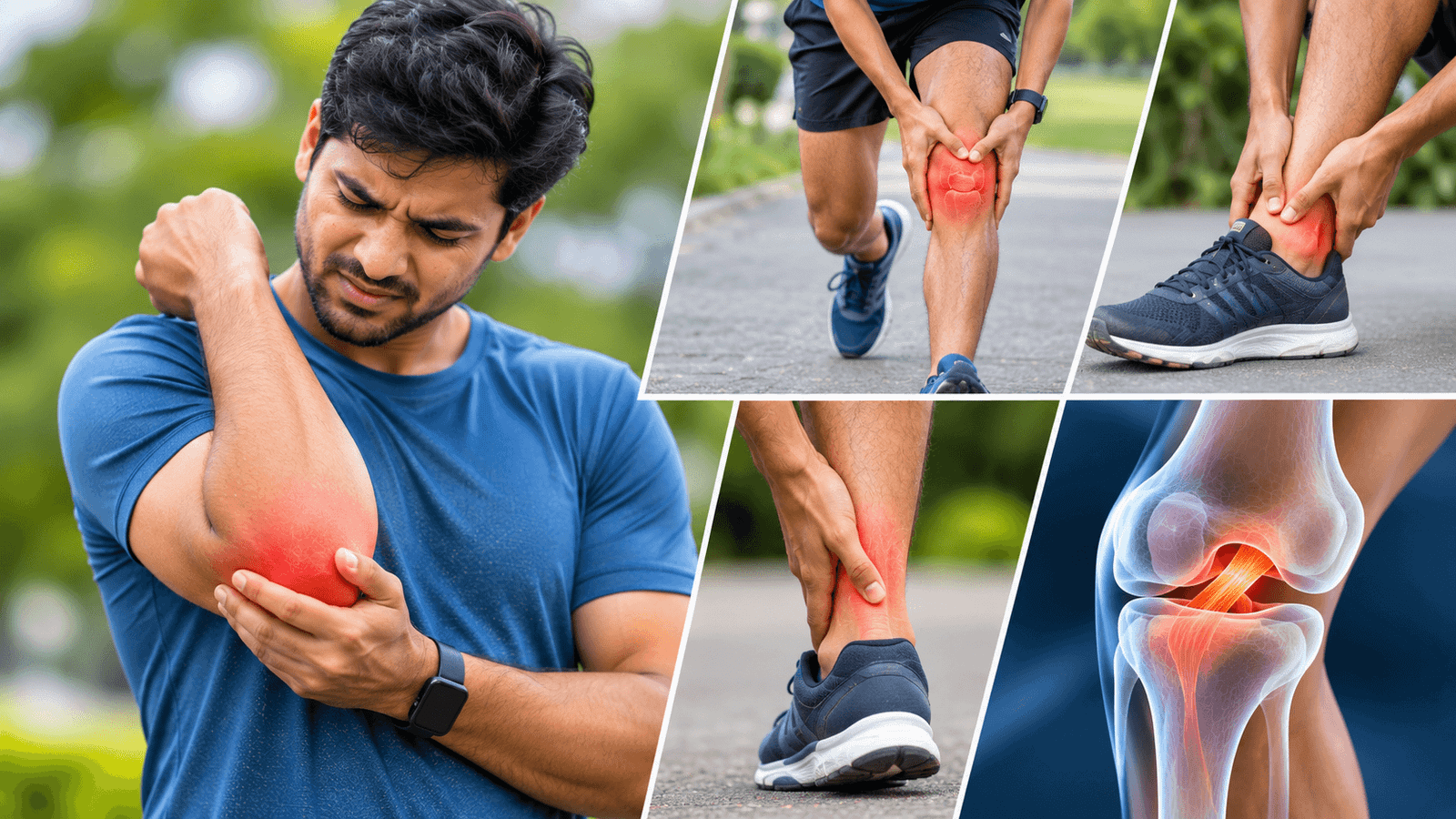
Sports and regular exercise are important for maintaining strength, mobility and overall health. However, repetitive movements, sudden changes in activity, poor technique, inadequate conditioning and accidents can lead to sports injuries.
Some injuries occur suddenly, such as an ankle sprain or muscle strain. Others develop gradually because of repeated stress on a tendon, muscle or joint. Tennis elbow, runner’s knee, Achilles tendon problems, shin splints and ligament injuries are common examples.
Recognizing the symptoms early can help prevent a minor problem from becoming a long-term condition. At Amuka Orthopedic Clinic in Hyderabad, sports injuries can be evaluated to identify the underlying cause and develop an appropriate treatment and rehabilitation plan.
What Are Sports Injuries?
Sports injuries are injuries affecting the muscles, tendons, ligaments, bones or joints during exercise, training or sporting activities.
They can generally be divided into two broad categories:
Acute Sports Injuries
These happen suddenly, often because of a fall, collision, twist or awkward movement.
- Ankle sprains
- Muscle strains
- Ligament injuries
- Dislocations
- Fractures
- Meniscus injuries
- Acute tendon injuries
Overuse Sports Injuries
These develop gradually when a body part is exposed to repeated stress without sufficient recovery.
- Tennis elbow
- Runner’s knee
- Achilles tendon pain
- Shin splints
- Patellar tendon problems
- Stress injuries
- Rotator cuff problems
Overuse injuries can occur in both professional athletes and people who exercise recreationally, particularly when training intensity or duration increases too quickly. ([nhs.uk](https://www.nhs.uk/live-well/exercise/knee-pain-and-other-running-injuries/))
1. Tennis Elbow
Tennis elbow, medically known as lateral epicondylitis, causes pain around the outside of the elbow. Despite its name, you do not have to play tennis to develop it.
Repeated gripping and wrist movements can place excessive stress on the tendons that attach the forearm muscles to the outside of the elbow. Over time, this repetitive stress can lead to tendon-related pain and reduced tolerance to activity.
Common Symptoms of Tennis Elbow
- Pain on the outside of the elbow
- Tenderness around the elbow
- Pain while gripping objects
- Discomfort when lifting or carrying objects
- Weakness in the hand or forearm
- Pain during repetitive wrist movements
Tennis elbow is generally associated with overuse rather than one specific injury. A structured exercise and rehabilitation program can help improve muscle endurance and the tendon’s ability to tolerate repetitive stress. ([orthoinfo.aaos.org](https://orthoinfo.aaos.org/globalassets/pdfs/2024-therapeutic-exercise-program-for-lateral-and-medial-epicondylitis.pdf))
How Is Tennis Elbow Treated?
Treatment depends on the severity and duration of symptoms. It may include:
- Modification of activities that aggravate the pain
- Physiotherapy
- Stretching and strengthening exercises
- Improving sports technique
- Appropriate pain management
- Bracing in selected cases
- Further orthopedic assessment when symptoms persist
Most patients do not require surgery. Persistent symptoms should, however, be assessed because other conditions can cause similar elbow pain.
2. Runner’s Knee
Runner’s knee is a common term used for pain around or behind the kneecap, particularly during running and activities involving repeated knee bending. Patellofemoral pain is one common cause of this type of knee pain.
Running-related knee pain can have several causes, so an accurate assessment is important rather than assuming that every runner with knee pain has the same condition.
Symptoms of Runner’s Knee
- Pain around or behind the kneecap
- Pain during or after running
- Discomfort while climbing or descending stairs
- Pain after sitting for a long time with the knee bent
- Pain during squatting
- Occasional clicking or discomfort around the kneecap
Running injuries can occur in beginners as well as experienced runners, particularly when training load increases rapidly. ([nhs.uk](https://www.nhs.uk/live-well/exercise/knee-pain-and-other-running-injuries/))
How Is Runner’s Knee Treated?
Initial management often involves reducing or temporarily modifying activities that trigger pain. Depending on the underlying cause, treatment may include:
- Activity modification
- Strengthening exercises
- Flexibility exercises
- Physiotherapy
- Running technique assessment
- Gradual return to running
Do not continue running through significant knee pain. If symptoms persist despite reducing activity, an orthopedic or physiotherapy assessment can help identify the underlying problem. ([nhs.uk](https://www.nhs.uk/live-well/exercise/knee-pain-and-other-running-injuries/))
3. Achilles Tendon Injuries
The Achilles tendon connects the calf muscles to the heel bone. Running, jumping and sudden increases in training can place significant stress on this tendon.
Achilles tendon problems may cause:
- Pain at the back of the ankle or heel
- Tendon stiffness, particularly after periods of rest
- Swelling or tenderness
- Pain during running or jumping
A sudden sharp pain or a sensation of being kicked in the back of the ankle can indicate a more serious Achilles tendon injury and requires prompt medical evaluation. ([nhs.uk](https://www.nhs.uk/live-well/exercise/knee-pain-and-other-running-injuries/))
4. Shin Splints
Shin splints, often referred to as medial tibial stress syndrome, cause pain along the shin. They are commonly associated with running and other high-impact activities.
They may occur when someone suddenly increases running distance, intensity or frequency without allowing enough time for the body to adapt.
How Can Shin Splints Be Managed?
- Reduce high-impact activity temporarily
- Allow adequate recovery
- Use appropriate footwear
- Gradually return to running
- Address strength and flexibility issues
- Seek assessment if pain persists or worsens
Persistent or severe shin pain should not automatically be assumed to be shin splints because stress injuries and other conditions can cause similar symptoms.
5. Ankle Sprains
Ankle sprains are among the most common sports injuries. They usually occur when the ankle twists or rolls unexpectedly, stretching or tearing one or more ligaments.
Typical symptoms include:
- Pain
- Swelling
- Bruising
- Tenderness
- Difficulty putting weight on the foot
- Reduced ankle movement
Early management may involve protecting the injured area, relative rest, ice, compression and elevation. As pain improves, gradual movement and rehabilitation are important to restore strength and mobility. ([nhs.uk](https://www.nhs.uk/conditions/sprains-and-strains/))
6. Muscle Strains
A muscle strain occurs when a muscle or tendon is overstretched or torn. Hamstring and calf strains are common among runners, football players and other athletes.
A strain may cause sudden pain during activity, followed by tenderness, swelling, weakness or difficulty using the affected muscle.
Continuing intense exercise immediately after a muscle strain can increase the risk of further injury. Initial rest and appropriate symptom management should be followed by gradual rehabilitation before returning to full sports activity. ([nhs.uk](https://www.nhs.uk/conditions/sprains-and-strains/))
7. ACL and Other Knee Ligament Injuries
The anterior cruciate ligament, or ACL, is one of the major stabilizing ligaments of the knee. ACL injuries commonly occur during sports that involve sudden stopping, jumping, landing or changing direction.
Possible symptoms include:
- A popping sensation at the time of injury
- Sudden knee pain
- Rapid swelling
- Difficulty bearing weight
- A feeling that the knee is unstable or giving way
Some ACL injuries may require surgical reconstruction, particularly in active individuals or when significant instability is present. Others may be managed with structured rehabilitation depending on the patient’s circumstances.
At Amuka’s Sports Medicine service, sports-related knee and ligament problems can be assessed and managed according to the injury and activity goals of the patient.
8. Shoulder Sports Injuries
Sports involving repeated overhead movements, throwing or lifting can place stress on the shoulder.
Common shoulder problems include:
- Rotator cuff injuries
- Shoulder impingement
- Shoulder instability
- Labral injuries
- Tendon-related shoulder pain
Persistent shoulder pain, weakness or restricted movement should be evaluated rather than ignored. Depending on the condition, treatment may involve physiotherapy, activity modification, medication or other orthopedic interventions.
How Are Sports Injuries Diagnosed?
An orthopedic assessment generally begins with a detailed discussion about the injury, activity, symptoms and previous injuries.
The examination may evaluate:
- Range of motion
- Muscle strength
- Joint stability
- Tenderness and swelling
- Movement patterns
- Sports-specific movements
Imaging may be recommended when clinically appropriate. Depending on the suspected injury, this can include X-rays, ultrasound, MRI or other investigations.
How Are Sports Injuries Treated?
There is no single treatment for every sports injury. The appropriate approach depends on the type, severity and location of the injury.
Activity Modification
Temporarily reducing or modifying the activity that causes pain can allow an irritated tissue to recover. This does not necessarily mean complete inactivity for a prolonged period.
Physiotherapy
Physiotherapy can help restore flexibility, strength, balance, coordination and movement patterns. Rehabilitation is particularly important before returning to demanding sports.
At Amuka Orthopedic Clinic, physiotherapy and rehabilitation can be incorporated into the recovery plan when appropriate.
Medication
Doctors may recommend appropriate pain-relieving medication depending on the injury and the patient’s medical history. Some anti-inflammatory medicines can help with pain and swelling but are not suitable for everyone. They should be used according to professional advice and product instructions. ([nhs.uk](https://www.nhs.uk/medicines/nsaids/))
Braces and Supports
Selected injuries may benefit from a brace, taping or another form of support. These should be used appropriately and should not replace rehabilitation when rehabilitation is required.
Surgery
Surgery may be considered for certain severe injuries, including some ligament tears, tendon ruptures, fractures or injuries that do not improve with appropriate non-surgical treatment.
Procedures such as arthroscopy may be used for selected joint conditions. You can learn more about arthroscopy at Amuka.
How to Prevent Common Sports Injuries
Although not every sports injury can be prevented, several habits can reduce the risk.
1. Warm Up Before Exercise
Start with several minutes of low-intensity activity before moving into more demanding exercise. A gradual warm-up prepares the body for the activity ahead.
For runners, brisk walking or gentle jogging for around 5 to 10 minutes can be a practical way to begin a session. ([nhs.uk](https://www.nhs.uk/live-well/exercise/knee-pain-and-other-running-injuries/))
2. Increase Training Gradually
A common mistake is increasing distance, weight, speed or training frequency too quickly. Give your body time to adapt when starting a new sport or increasing your workload.
3. Strengthen Supporting Muscles
Strength training can help improve the muscles that support the joints. For runners, this may include strengthening the quadriceps, hamstrings, glutes and calf muscles.
4. Use Appropriate Equipment
Wear footwear appropriate for your sport and replace worn-out shoes when necessary. Sports equipment should also be appropriate for your activity and skill level.
5. Learn Proper Technique
Incorrect movement patterns can place unnecessary stress on joints and tendons. Beginners should consider professional instruction when learning technically demanding sports.
6. Allow Recovery Time
Training every day without adequate recovery can increase the risk of overuse problems. Rest and recovery are part of an effective training program.
7. Do Not Ignore Persistent Pain
Pain that repeatedly appears during exercise is a signal that something may need to change. Continuing to train through persistent pain can sometimes make the problem more difficult to treat.
When Should You See an Orthopedic Doctor?
Not every sports injury requires immediate specialist care. However, medical evaluation is important when symptoms are severe, persistent or affecting normal function.
Seek orthopedic evaluation if:
- Pain is severe or getting worse.
- There is significant swelling or bruising.
- You cannot put weight on the affected limb.
- A joint feels unstable or repeatedly gives way.
- You heard a pop or crack during the injury.
- You cannot move the joint normally.
- The injury keeps returning.
- Pain continues despite reducing activity.
- You are unable to return to your normal sport or exercise.
Urgent medical attention is particularly important if an injured body part looks deformed, becomes numb or changes colour, or if a fracture or major tendon injury is suspected. ([nhs.uk](https://www.nhs.uk/conditions/sprains-and-strains/))
Returning to Sports After an Injury
Returning to sports too quickly can increase the risk of reinjury. Recovery should be gradual and based on symptoms, strength, movement and the demands of the sport.
Before returning to full activity, you should ideally be able to perform sport-specific movements without significant pain or instability.
A rehabilitation program may progress through:
- Daily activities
- Gentle range-of-motion exercises
- Strengthening exercises
- Balance and coordination work
- Sport-specific drills
- Gradual return to training
- Full sports participation
Sports Injury Treatment at Amuka Orthopedic Clinic
At Amuka Orthopedic Clinic in Hyderabad, sports injuries are evaluated with the goal of identifying the underlying problem and helping patients return safely to their normal activities.
Depending on the injury, treatment may include conservative care, physiotherapy, rehabilitation, sports medicine, arthroscopy or surgery when clinically indicated.
Amuka’s Sports Medicine service focuses on sports-related musculoskeletal problems, while arthroscopy may be considered for selected joint injuries that require minimally invasive surgical treatment.
Frequently Asked Questions
What is the most common sports injury?
Common sports injuries include sprains, strains, tendon problems and overuse injuries. The most frequent injury varies depending on the sport, training level and activity.
Can tennis elbow heal without surgery?
Many cases of tennis elbow improve without surgery through activity modification, appropriate exercises, physiotherapy and other conservative treatments. Persistent symptoms should be evaluated by an orthopedic specialist.
Can I continue running with runner’s knee?
It is generally better to stop or modify running when it causes significant knee pain. Returning to running should be gradual after symptoms improve and the underlying problem has been addressed. ([nhs.uk](https://www.nhs.uk/live-well/exercise/knee-pain-and-other-running-injuries/))
How can I prevent sports injuries?
Warm up before exercise, increase training gradually, strengthen supporting muscles, use appropriate equipment, learn proper technique and allow sufficient recovery between demanding workouts.
When does a sports injury require surgery?
Surgery may be necessary for certain fractures, complete tendon ruptures, significant ligament injuries or persistent problems that do not respond to appropriate non-surgical treatment. The decision depends on the specific injury and the patient’s activity goals.
When should I see an orthopedic doctor for a sports injury?
See an orthopedic doctor if pain is severe or persistent, the joint is unstable, there is significant swelling, you cannot bear weight, the injury keeps recurring or you cannot return to your normal activities.
Conclusion
Tennis elbow, runner’s knee, Achilles tendon problems, shin splints, ankle sprains, muscle strains and ligament injuries are common sports-related conditions. Many can improve with timely treatment, appropriate rehabilitation and modifications to training.
Prevention is equally important. Warming up, progressing gradually, strengthening supporting muscles, using appropriate equipment and allowing enough recovery can reduce the risk of many sports injuries.
If pain persists or affects your ability to exercise, do not simply train through it. An accurate diagnosis can help you receive the right treatment and reduce the risk of long-term problems.
If you are dealing with a sports injury in Hyderabad, consult Amuka Orthopedic Clinic for specialist evaluation, sports medicine and rehabilitation support.