

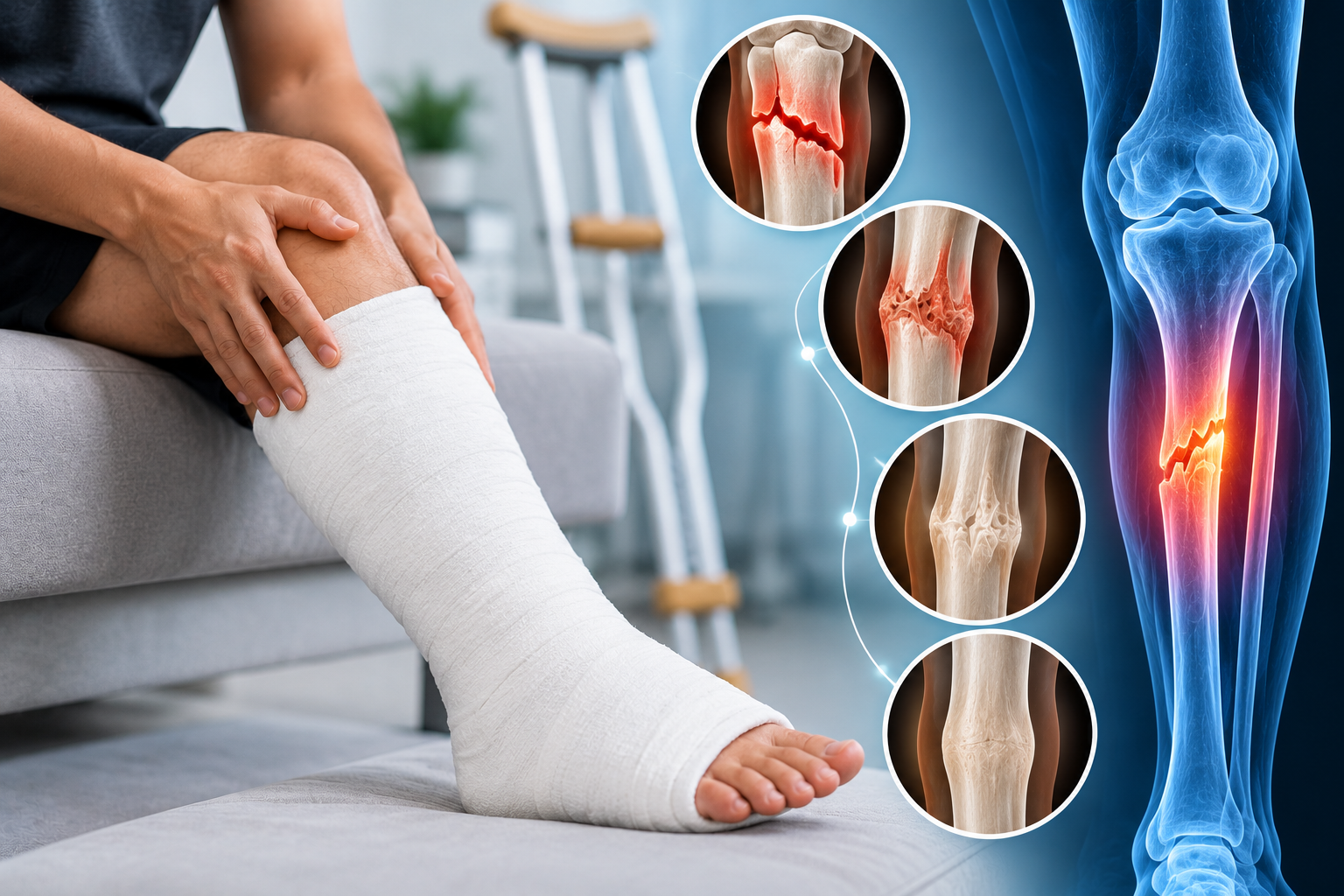
A broken bone can be painful and stressful, but most fractures heal successfully with appropriate treatment, protection, and rehabilitation. However, bone healing does not happen overnight. The recovery process can take several weeks or months depending on the location and severity of the fracture, the patient’s age and health, the type of treatment, and whether there are complications.
Understanding the fracture healing timeline can help you know what to expect during recovery. More importantly, recognizing warning signs such as increasing pain, worsening swelling, fever, numbness, deformity, or failure to improve can help you seek an urgent orthopedic review when necessary.
At Amuka Orthopedic Clinic Hyderabad, our orthopedic specialists provide evaluation and treatment for fractures, trauma injuries, and other bone and joint conditions. Early assessment can help determine whether a fracture is healing normally or requires additional treatment.
How Long Does a Broken Bone Take to Heal?
There is no single healing time that applies to every fracture. Many uncomplicated fractures show substantial healing over approximately 6 to 12 weeks, but some bones and more complex fractures can take considerably longer.
Healing depends on several factors, including:
- Location and type of fracture
- Whether the fracture is displaced or stable
- Age of the patient
- Blood supply to the injured area
- Smoking or tobacco use
- Diabetes and other medical conditions
- Nutrition and overall health
- Whether the bone is adequately immobilized
- Compliance with weight-bearing restrictions
- Whether surgery was required
Your orthopedic surgeon may use follow-up X-rays and clinical examination to determine whether the bone is progressing through the expected stages of healing.
The Fracture Healing Timeline
Stage 1: Immediately After the Fracture
During the first few days, the body responds to the injury with inflammation. Blood vessels around the broken bone may be damaged, resulting in a collection of blood known as a hematoma.
Common symptoms during this stage include:
- Pain
- Swelling
- Bruising
- Tenderness
- Difficulty moving the affected limb
Depending on the fracture, the bone may need a cast, splint, brace, or surgical stabilization to maintain proper alignment.
Stage 2: Early Repair
Over the following weeks, the body begins producing new tissue around the fracture. A soft callus forms around the broken bone and gradually provides additional stability.
Pain and swelling should generally begin to improve over time, although some discomfort may remain during movement or when pressure is placed on the injured area.
Stage 3: Hard Callus Formation
As healing progresses, the soft callus gradually becomes harder as new bone develops around the fracture. The bone becomes increasingly stable, although it may not yet have regained its original strength.
This is why patients are often advised to follow their orthopedic surgeon’s instructions regarding weight-bearing and physical activity even when they begin to feel better.
Stage 4: Bone Remodeling
After the fracture has united, the bone continues to remodel. Over time, the newly formed bone is reshaped and strengthened according to the stresses placed on it.
This remodeling phase can continue for months or even longer, depending on the fracture and individual healing process.
Fracture Healing Timeline at a Glance
| Healing Stage | What Happens | What You May Notice |
|---|---|---|
| First few days | Inflammatory response begins | Pain, swelling and bruising |
| First few weeks | Soft callus develops | Pain gradually begins to improve |
| Following weeks | Harder new bone develops | Increasing stability |
| Following months | Bone remodeling continues | Gradual return of strength and function |
Signs That Your Fracture May Be Healing Normally
Although recovery varies between individuals, certain changes are generally encouraging signs that healing is progressing.
- Pain gradually becomes less intense
- Swelling decreases over time
- Movement improves as advised by your doctor
- The injured area becomes more stable
- Follow-up imaging shows progressive healing
- You gradually regain strength and function through rehabilitation
Remember that feeling better does not necessarily mean the bone is completely healed. Always follow your orthopedic surgeon’s instructions before returning to full activity.
Warning Signs That Need an Orthopedic Review
Some symptoms during fracture recovery should not be ignored. Contact your orthopedic team if you notice symptoms that are getting worse instead of improving.
1. Increasing or Severe Pain
Pain that becomes progressively worse after an initial period of improvement may require medical assessment. Persistent pain can have several causes, including inadequate stabilization, delayed healing, infection, or problems involving surrounding tissues.
2. Persistent or Increasing Swelling
Some swelling is common after a fracture, especially during the early stages. However, swelling that suddenly increases or does not gradually improve should be assessed by a medical professional.
3. Redness, Warmth or Fever
Redness and warmth around the injury accompanied by fever or worsening pain may indicate an infection, particularly after fracture surgery. These symptoms require prompt medical attention.
4. Numbness or Tingling
New or worsening numbness, tingling, burning sensations, or weakness in the hand or foot can indicate nerve or circulation problems.
Seek urgent medical evaluation if these symptoms develop suddenly or are accompanied by severe swelling or loss of movement.
5. Change in Skin Color or Temperature
If the fingers or toes beyond the fracture become unusually pale, blue, cold, or significantly different from the other side, urgent medical assessment is important because circulation may be compromised.
6. Deformity or Change in Alignment
A visible change in the position or shape of the injured limb may indicate displacement or another complication. Do not attempt to straighten the bone yourself.
7. Difficulty Moving the Limb
Increasing difficulty moving the fingers, toes, hand, or foot after a fracture should be evaluated, particularly if it is associated with swelling, numbness, or severe pain.
When a Fracture May Be Healing Slowly
Some fractures take longer than expected to heal. A delay does not necessarily mean that the bone will not heal, but it may require closer monitoring.
Factors that can contribute to slower healing include:
- Poor blood supply to the fracture site
- Severe or complex fractures
- Significant displacement
- Infection
- Smoking or tobacco use
- Poor nutritional status
- Diabetes or certain other medical conditions
- Inadequate fracture stability
- Repeated stress on the healing bone
Your orthopedic specialist may recommend additional imaging or treatment depending on how the fracture is progressing.
What Is Delayed Union or Nonunion?
Sometimes a fracture takes longer than expected to heal. This is commonly referred to as delayed union. In some cases, the bone fails to heal properly over an extended period, which may be described as nonunion.
Possible signs include persistent pain at the fracture site, continued instability, and limited improvement on follow-up imaging.
If your orthopedic surgeon suspects delayed healing, additional treatment may be considered depending on the cause. This can include improving fracture stability, addressing infection or nutritional problems, bone-stimulation techniques in selected cases, or revision surgery when necessary.
Can You Walk on a Broken Bone While It Is Healing?
Whether you can put weight on a fractured limb depends entirely on the location and type of fracture and the treatment used.
Some fractures allow early weight-bearing under medical supervision, while others require strict protection for several weeks.
Never increase weight-bearing or return to sports simply because your pain has improved. Your orthopedic surgeon will determine when it is safe to progress activity.
Importance of Follow-Up X-Rays
Follow-up appointments are an important part of fracture care. An X-ray can help your orthopedic surgeon assess alignment and evidence of bone healing.
Follow-up evaluation may help determine:
- Whether the bone remains properly aligned
- Whether new bone formation is progressing
- Whether the cast or brace can be changed
- When weight-bearing can be increased
- Whether additional treatment is necessary
How Physiotherapy Helps After a Fracture
Once your orthopedic surgeon confirms that rehabilitation can begin, physiotherapy can help restore movement, strength, balance, and function.
Depending on the injury, rehabilitation may include:
- Range-of-motion exercises
- Muscle strengthening
- Balance training
- Gait training
- Gradual weight-bearing exercises
- Activity-specific rehabilitation
Starting exercises too early or progressing too quickly can interfere with healing, so rehabilitation should follow the treatment plan provided by your orthopedic team.
How You Can Support Bone Healing
Following your doctor’s instructions is the most important part of fracture recovery. You can also support healing by maintaining healthy lifestyle habits.
- Follow weight-bearing restrictions carefully
- Attend scheduled follow-up appointments
- Eat a balanced diet with adequate protein and essential nutrients
- Avoid smoking and tobacco products
- Take prescribed medicines as directed
- Keep casts and surgical wounds clean and dry as instructed
- Complete physiotherapy when recommended
- Avoid returning to high-impact activities too early
When Should You Seek Urgent Orthopedic Care?
Some fracture-related symptoms require prompt medical attention rather than waiting for your next scheduled appointment.
- Severe or rapidly increasing pain
- Sudden numbness or weakness
- Fingers or toes becoming blue, pale, or cold
- Rapidly increasing swelling
- High fever or signs of infection
- New deformity or obvious displacement
- Heavy bleeding or significant wound problems
- Sudden inability to move the affected limb
If these symptoms occur, seek urgent medical attention rather than attempting to manage them at home.
Fracture Treatment at Amuka Orthopedic Clinic
At Amuka Orthopedic Clinic Hyderabad, fracture treatment begins with accurate diagnosis and assessment of the injury. Depending on the fracture, treatment may involve immobilization, casting, bracing, closed reduction, or surgical fixation.
Our orthopedic care can include:
- Fracture and trauma evaluation
- Digital X-ray assessment
- Fracture reduction and stabilization
- Surgical fracture fixation when required
- Post-fracture physiotherapy
- Rehabilitation and mobility training
The treatment approach is selected according to the type, location, severity, and stability of the fracture.
Book an Orthopedic Review for a Healing Fracture
A broken bone needs time to heal, but persistent or worsening symptoms should not be ignored. Recognizing warning signs and attending follow-up appointments can help identify complications early and keep your recovery on track.
If you have a fracture that is causing persistent pain, swelling, reduced movement, or other concerning symptoms, consult the orthopedic specialists at Amuka Orthopedic Clinic Hyderabad.
Schedule an orthopedic consultation for appropriate fracture evaluation, treatment, and rehabilitation guidance.
Frequently Asked Questions
1. How long does a broken bone take to heal?
Many uncomplicated fractures show substantial healing within approximately 6 to 12 weeks, but healing time varies significantly depending on the bone, fracture type, age, health, and treatment.
2. Is pain normal while a fracture is healing?
Some pain and tenderness are common, particularly during the early stages. However, pain that becomes severe or progressively worse should be evaluated by an orthopedic specialist.
3. What are the signs that a fracture may not be healing properly?
Persistent pain, instability, lack of improvement, or abnormal findings on follow-up imaging may indicate delayed healing and require further evaluation.
4. Can I remove my cast if the pain has gone away?
No. A reduction in pain does not necessarily mean the bone is fully healed. Casts, braces, or other immobilization devices should only be removed or changed according to your doctor’s instructions.
5. When should I seek urgent care after a fracture?
Seek prompt medical attention for severe increasing pain, sudden numbness, weakness, significant swelling, blue or cold fingers or toes, fever, wound problems, or a new deformity.