
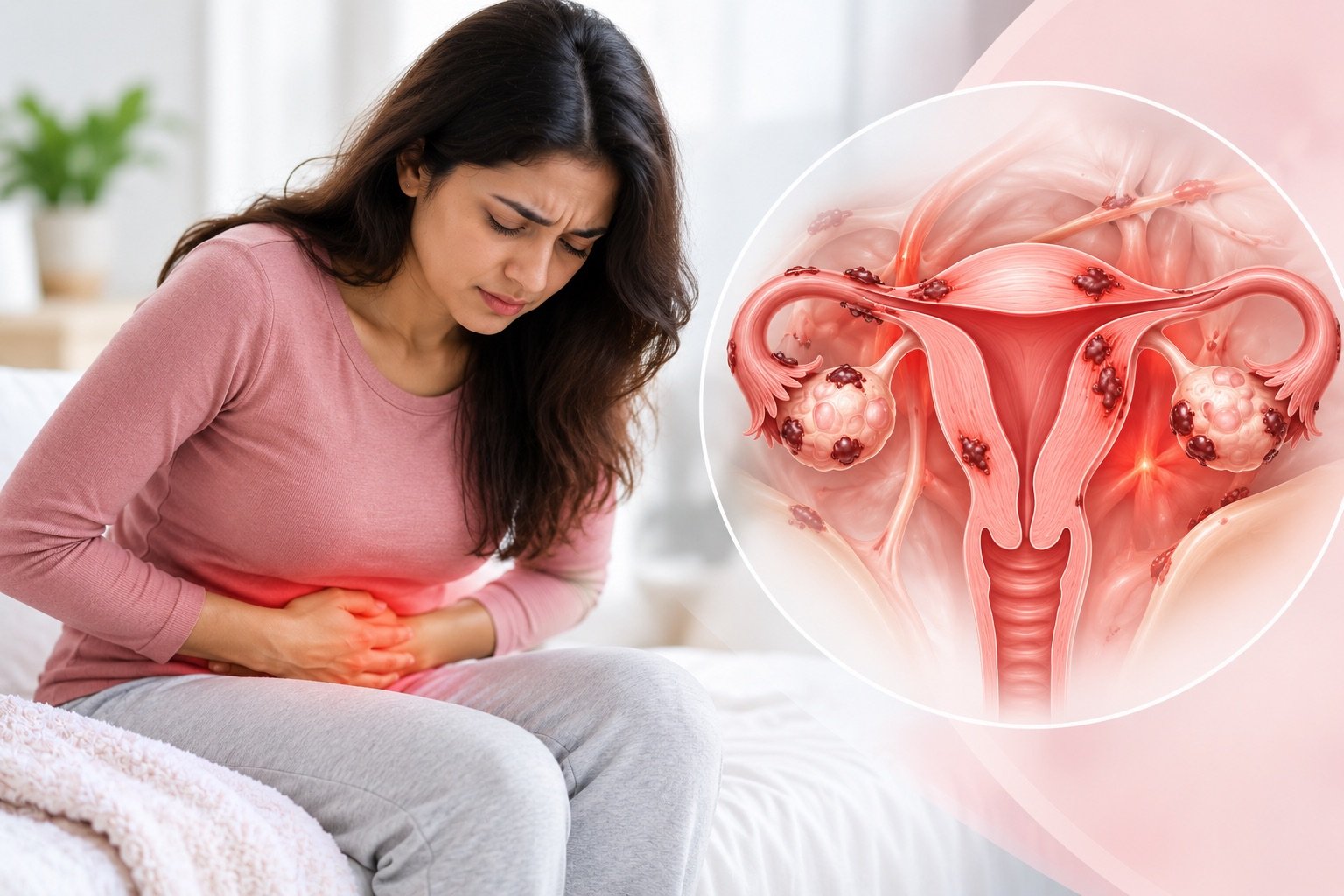
Period pain is common, but severe or persistent menstrual pain should not always be dismissed as a normal part of having a period. For some women, painful periods may be a sign of endometriosis, a chronic condition in which tissue similar to the lining of the uterus grows outside the uterus and can cause inflammation, pain and scar tissue.
Endometriosis can affect the ovaries, fallopian tubes, pelvic tissues and sometimes the bowel or bladder. Symptoms can vary significantly from one person to another, and some people may have endometriosis with few or no noticeable symptoms.
Understanding the warning signs can help women recognize when period pain may need further evaluation by a gynecologist.
What Is Endometriosis?
Endometriosis is a condition in which tissue similar to the endometrium, the lining of the uterus, develops outside the uterus. These areas can respond to hormonal changes during the menstrual cycle, leading to inflammation and pain.
Endometriosis most commonly affects the pelvis, but it can also involve the ovaries, fallopian tubes, bowel, bladder and, less commonly, areas outside the pelvis.
It is a long-term condition that can affect daily activities, relationships, work, emotional well-being and fertility. However, treatments are available to help control symptoms and manage the condition.
Is Period Pain Always Normal?
Mild to moderate cramps around the beginning of menstruation are common. Period pain often occurs because the uterus contracts during menstruation and may last for a few days.
However, pain that is severe enough to interfere with school, work, exercise, sleep or normal daily activities deserves medical attention.
Endometriosis is one possible cause, but painful periods can also occur with conditions such as adenomyosis, fibroids or pelvic inflammatory disease. A gynecological evaluation is therefore important rather than assuming that severe cramps automatically mean endometriosis.
Common Symptoms of Endometriosis
Endometriosis symptoms can be different for every person. Some women experience severe menstrual pain, while others may have pelvic pain, bowel symptoms, pain during intercourse or difficulty becoming pregnant.
1. Severe Period Pain
One of the most recognized symptoms is severe menstrual pain. The pain may begin before the period, become worse during menstruation and interfere with normal daily activities.
If you regularly need to miss work or school, stay in bed, cancel activities or rely heavily on pain medication because of your periods, it is worth discussing your symptoms with a gynecologist.
2. Pelvic Pain Between Periods
Endometriosis-related pain does not always occur only during menstruation. Some women experience persistent or recurring pelvic pain between periods.
Chronic pelvic pain can also have other causes, so a proper medical assessment is important.
3. Pain During or After Sex
Pain during or after sexual intercourse, particularly deep pelvic pain, can occur in people with endometriosis.
This symptom should not simply be accepted as something that must be tolerated. Discussing it with a gynecologist can help identify whether endometriosis or another condition may be contributing to the pain.
4. Pain During Bowel Movements
Some women with endometriosis experience pain when passing stool, particularly around the time of their period. Endometriosis can sometimes involve tissues near the bowel.
Changes in bowel habits, constipation or diarrhea may also occur around menstruation in some individuals.
5. Pain or Discomfort During Urination
Urinary symptoms can occur when endometriosis affects tissues around the bladder or urinary tract. Pain while urinating, especially when it follows a cyclical pattern around menstruation, should be discussed with a doctor.
6. Heavy Menstrual Bleeding
Some women with endometriosis experience heavy periods. Heavy bleeding may require frequent changing of sanitary products and can contribute to tiredness or iron deficiency in some people.
7. Lower Back Pain
Endometriosis can cause pain in the lower back as well as the lower abdomen and pelvis. The pain may become more noticeable before or during menstruation.
8. Fatigue
Persistent fatigue is another symptom reported by some people with endometriosis. Pain, disrupted sleep, heavy bleeding and the overall impact of chronic inflammation can contribute to feeling exhausted.
9. Difficulty Getting Pregnant
Endometriosis can be associated with fertility problems. In some women, difficulty becoming pregnant may be one of the reasons the condition is eventually investigated.
However, having endometriosis does not automatically mean that pregnancy will be impossible. Fertility outcomes vary considerably, and treatment options are available depending on individual circumstances.
Endometriosis Symptoms vs Normal Period Cramps
| Feature | Common Period Cramps | Possible Endometriosis |
|---|---|---|
| Pain intensity | Usually manageable | May be severe or disabling |
| Duration | Often limited to the beginning of the period | May begin before menstruation or continue beyond the period |
| Effect on daily life | Usually manageable with routine measures | May interfere with work, school, sleep or activities |
| Pain during sex | Not typical | Can occur |
| Pain with bowel movements | Not typical | Can occur, especially around menstruation |
| Pain with urination | Not typical | Can occur in some cases |
| Fertility concerns | Not associated | May occur in some women |
This comparison is only a general guide. Symptoms overlap between different conditions, and only a healthcare professional can determine the likely cause of persistent or severe pelvic pain.
When Should You See a Gynecologist?
You should consider a gynecological consultation if period pain:
- Stops you from attending work, school or normal activities
- Is becoming progressively worse over time
- Requires frequent or repeated use of pain medication
- Continues between periods
- Occurs during or after sexual intercourse
- Occurs when passing stool or urine
- Is associated with unusually heavy menstrual bleeding
- Is accompanied by persistent fatigue or pelvic discomfort
- Is associated with difficulty becoming pregnant
The NHS recommends seeking medical advice when period pain becomes more painful, heavier or irregular, or when pain interferes with normal daily activities.
How Is Endometriosis Diagnosed?
Diagnosing endometriosis can sometimes take time because its symptoms can resemble other gynecological, bowel or urinary conditions.
Medical History
Your doctor may ask about when the pain begins, how severe it is, whether it follows your menstrual cycle and whether you experience bowel, urinary, sexual or fertility-related symptoms.
Keeping a menstrual and symptom diary can be helpful. Record the first and last day of your period, pain severity, bleeding pattern, medication use and symptoms occurring around menstruation.
Physical Examination
Depending on your symptoms, your gynecologist may perform an abdominal or pelvic examination. The need for a particular examination depends on your individual situation.
Ultrasound
An ultrasound scan may be recommended to look for ovarian cysts or other abnormalities and can sometimes identify features associated with endometriosis.
MRI
MRI may be recommended in selected cases, particularly when deeper endometriosis is suspected or when more detailed imaging is needed.
Laparoscopy
Laparoscopy is a minimally invasive surgical procedure that allows doctors to examine the pelvis directly. In selected cases, it may be used to confirm or treat endometriosis.
Importantly, current guidance recognizes that treatment does not necessarily have to wait for surgical confirmation in every situation. Symptoms and imaging can contribute to a clinical diagnosis and treatment plan.
What Causes Endometriosis?
The exact cause of endometriosis is not fully understood. Researchers have identified several possible contributing factors, but there is no single confirmed cause that explains every case.
A family history may also be relevant. If a close family member has been diagnosed with endometriosis, it is useful to mention this during a gynecological consultation.
Can Endometriosis Be Treated?
There is currently no definitive cure for endometriosis, but treatment can help control pain and other symptoms and address individual concerns such as fertility. Treatment is selected based on symptoms, severity, reproductive plans, side effects and personal preferences.
Pain Relief
Pain-relieving medicines may be recommended to manage endometriosis-related pain. Your doctor can advise which medication is appropriate based on your health history and other medicines you may be taking.
Hormonal Treatment
Hormonal medicines can reduce or suppress menstrual cycling and may help decrease endometriosis-related pain in some patients. Options can include combined hormonal contraceptives, progestin-based treatments and other hormonal therapies.
Hormonal treatment may not be suitable for everyone, particularly those who are actively trying to become pregnant, so treatment should be individualized.
Surgery
Surgery may be considered when symptoms are severe, medication is not effective or tolerated, significant endometriosis is present, or fertility concerns require further evaluation or treatment.
Gyneccology Surgical treatment may involve removing endometriosis lesions, adhesions or certain ovarian cysts. The appropriate procedure depends on the location and extent of disease.
Fertility Treatment
For women experiencing difficulty becoming pregnant, fertility treatment may be considered depending on the individual’s age, ovarian reserve, disease severity and other fertility factors.
Options may include fertility medicines, intrauterine insemination or in vitro fertilization when appropriate.
Does Severe Period Pain Mean You Definitely Have Endometriosis?
No. Severe period pain can have several possible causes, and having painful periods does not automatically mean that you have endometriosis.
Other conditions that can cause pelvic or menstrual pain include adenomyosis, fibroids and pelvic inflammatory disease. Your doctor may need to consider several possibilities before reaching a diagnosis.
Why You Should Not Ignore Severe Period Pain
Many women grow up being told that severe period pain is simply something they have to tolerate. However, pain that repeatedly interferes with daily life deserves attention.
Endometriosis can have significant effects on quality of life, relationships, work, education and fertility. WHO notes that delayed diagnosis remains common and that improving awareness and access to appropriate care can help reduce the long-term impact of the condition.
Seeking medical advice does not necessarily mean you have endometriosis. It simply allows a doctor to investigate persistent symptoms and identify an appropriate management plan.
What You Can Track Before Your Appointment
Keeping a record of your symptoms can make your consultation more productive. Consider tracking:
- The first and last day of each period
- Pain severity on a scale of 1 to 10
- When the pain begins relative to your period
- How long the pain lasts
- Whether pain occurs between periods
- Bleeding intensity and unusual bleeding
- Pain during sex
- Pain during bowel movements or urination
- Bloating, nausea or bowel changes
- Medications taken and how well they work
- Any difficulty becoming pregnant
This information can help your gynecologist understand the pattern of your symptoms and determine what further evaluation may be appropriate.
Frequently Asked Questions
What is the most common symptom of endometriosis?
Severe period pain is one of the most common symptoms, but endometriosis can also cause pelvic pain, pain during sex, pain with bowel movements or urination, heavy bleeding, fatigue and fertility difficulties.
How do I know if my period pain is not normal?
Consider seeking medical advice if your period pain is severe, worsening, continues outside your period or interferes with work, school, sleep, relationships or everyday activities.
Can endometriosis cause pain between periods?
Yes. Some people with endometriosis experience chronic or recurring pelvic pain that can occur outside menstruation.
Can endometriosis affect fertility?
Endometriosis can be associated with difficulty becoming pregnant, although many people with endometriosis are able to conceive. Fertility treatment may be considered when appropriate.
Can endometriosis be seen on an ultrasound?
Ultrasound can identify some findings associated with endometriosis, including certain ovarian cysts, but a normal ultrasound does not necessarily rule out endometriosis.
Does endometriosis always require surgery?
No. Treatment can include pain medicines and hormonal therapies, depending on the individual’s symptoms and reproductive goals. Surgery may be considered in selected cases.
Can endometriosis go away on its own?
Endometriosis is considered a chronic condition. Symptoms can change over time, and treatment can help control them, but there is currently no definitive cure.
When should I see a gynecologist for period pain?
You should consider a consultation if period pain is severe, worsening, affects your daily activities, occurs during sex or bowel movements, or is associated with heavy bleeding, chronic pelvic pain or fertility concerns.
Conclusion
Severe period pain should not automatically be considered normal. While menstrual cramps are common, pain that is intense, persistent, worsening or disruptive to everyday life can sometimes indicate an underlying condition such as endometriosis.
Recognizing symptoms such as severe menstrual pain, chronic pelvic pain, painful intercourse, painful bowel movements, urinary discomfort, heavy bleeding and difficulty becoming pregnant can help women seek medical evaluation sooner.
If your period pain is affecting your quality of life, speak with a gynecologist at Amuka Clinic. Early evaluation can help identify the cause of your symptoms and guide an appropriate treatment plan.