
Many parents become concerned when they notice that their child’s legs appear curved outward or that the knees touch while the ankles remain apart. These conditions are commonly described as bow legs and knock knees. In many children, changes in leg alignment are a normal part of growth and gradually improve as the child gets older.
However, persistent, severe, uneven or worsening leg alignment can sometimes indicate an underlying orthopedic condition that needs medical evaluation. Knowing when these changes are part of normal development and when to consult a pediatric orthopedic doctor can help parents seek appropriate care at the right time.
At Amuka Orthopedic Clinic, children with concerns related to bone, joint and limb alignment can be evaluated to determine whether their leg position is appropriate for their age or requires further investigation.
What Are Bow Legs?
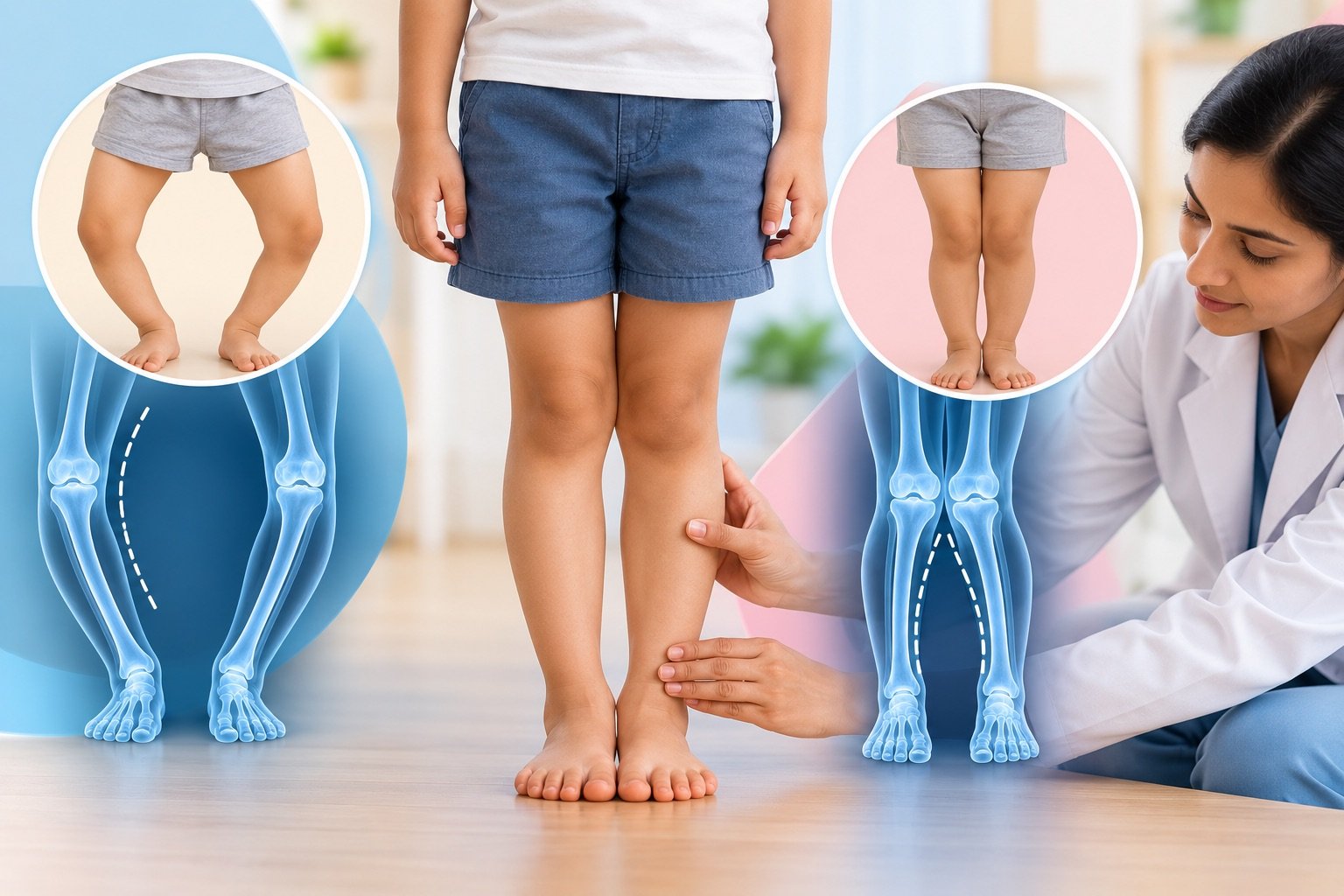
Bow legs, medically known as genu varum, occur when the legs curve outward. When a child stands with the feet together, the knees may remain separated, creating an appearance similar to the shape of a bow.
Bow legs are particularly common in babies and toddlers because of their position inside the womb and the natural changes that occur as the legs develop. In many children, the alignment gradually becomes straighter without treatment.
The appearance of the legs should therefore be considered in relation to the child’s age, growth pattern and overall development rather than judged solely by how the legs look.
When Are Bow Legs Normal?
Most babies are born with some degree of bowing. This usually becomes less noticeable as children begin walking and their lower limbs develop.
Physiological bowing generally improves naturally during early childhood. However, parents should discuss the condition with a pediatric orthopedic specialist if the bowing is pronounced, continues beyond the expected age, becomes worse, affects only one leg or is associated with pain or difficulty walking.
What Are Knock Knees?
Knock knees, medically called genu valgum, occur when the knees move inward toward each other while the ankles remain separated.
Knock knees can also be a normal stage of childhood development. After the legs become straighter during early childhood, many children naturally develop some inward knee alignment for a period of time. In most children, this alignment gradually improves as they grow.
However, significant or persistent knock knees may require assessment, particularly when the condition is severe, asymmetric or associated with other symptoms.
Bow Legs vs Knock Knees: Understanding the Difference
| Feature | Bow Legs | Knock Knees |
|---|---|---|
| Medical term | Genu varum | Genu valgum |
| Leg alignment | Legs curve outward | Knees angle inward |
| Standing position | Knees remain apart when feet are together | Knees touch while ankles remain apart |
| Common in childhood | Yes, particularly in younger children | Yes, during certain stages of growth |
| Usually requires treatment? | Often no when developmental | Often no when developmental |
Why Do Children Develop Bow Legs or Knock Knees?
Leg alignment can be influenced by several factors. In many children, the primary reason is simply normal skeletal development.
Normal Growth and Development
The shape and alignment of a child’s legs naturally change during growth. Temporary bowing and knock-knee alignment can therefore be part of normal development.
Vitamin D Deficiency and Rickets
In some children, nutritional deficiencies can affect bone development. Vitamin D deficiency and rickets can weaken growing bones and contribute to abnormal leg alignment.
If a child has significant or progressive bowing, a doctor may consider nutritional and metabolic causes as part of the evaluation.
Blount Disease
Blount disease is a growth disorder affecting the upper portion of the shinbone. It can cause progressive bowing of the legs and may require specialist assessment and treatment.
Previous Injury
An injury involving the growth plate can sometimes affect the way a bone develops. If leg alignment changes after an injury, an orthopedic evaluation may be appropriate.
Other Bone or Growth Conditions
Less commonly, abnormal leg alignment may be associated with skeletal disorders, metabolic conditions or other growth abnormalities. A pediatric orthopedic specialist can determine whether additional testing is necessary.
When Should Parents Consult a Pediatric Orthopedic Doctor?
Not every child with bow legs or knock knees needs treatment. However, parents should consider an orthopedic evaluation when they notice specific warning signs.
1. The Alignment Is Severe
If the child’s legs appear significantly bowed or the knees angle strongly inward, it is worth discussing the alignment with a pediatric orthopedic doctor.
2. One Leg Looks Different From the Other
Asymmetry is an important reason for evaluation. Normal developmental changes generally affect both legs in a relatively similar manner. A noticeable difference between the two sides may require further investigation.
3. The Deformity Is Getting Worse
Parents should seek medical advice if the bowing or knock-knee appearance continues to increase rather than gradually improving.
4. The Child Has Pain
Developmental changes in leg alignment are not usually associated with significant pain. Persistent knee, hip, ankle or leg pain should therefore be discussed with a doctor.
5. Walking Is Difficult
If the child frequently trips, has difficulty walking, develops an unusual gait or appears to struggle with physical activities, an orthopedic assessment may help identify the underlying cause.
6. The Child Has Difficulty Running or Participating in Activities
Significant alignment problems can sometimes affect movement and lower-limb mechanics. If a child avoids running, jumping or playing because of discomfort or difficulty, medical assessment is advisable.
7. The Child Is Shorter Than Expected or Has Other Growth Concerns
Abnormal limb alignment combined with poor growth or other developmental concerns may warrant evaluation for nutritional, metabolic or skeletal conditions.
8. The Alignment Persists Beyond the Expected Growth Stage
When bow legs or knock knees do not follow the expected pattern of childhood development, a pediatric orthopedic specialist can determine whether the alignment is still within the normal range.
How Does a Pediatric Orthopedic Doctor Evaluate Bow Legs and Knock Knees?
The evaluation generally begins with a detailed history and physical examination. The doctor may ask about the child’s age, growth, walking pattern, symptoms, previous injuries, nutritional history and family history.
Physical Examination
The doctor examines the child’s legs while standing and walking. The alignment of the hips, knees, ankles and feet may be assessed to understand whether the deformity originates from one particular area or involves the overall lower limb.
Growth Assessment
A child’s height, weight and growth pattern may be reviewed because abnormal growth can sometimes provide clues about an underlying condition.
Walking and Gait Assessment
The way the child walks, runs or stands can provide useful information about lower-limb alignment and joint mechanics.
X-rays
Not every child with bow legs or knock knees requires an X-ray. When imaging is appropriate, standing lower-limb X-rays may help the doctor evaluate bone alignment and identify structural abnormalities.
Blood Tests
If a nutritional or metabolic condition is suspected, the doctor may recommend blood tests to assess factors such as vitamin D and other markers related to bone health.
Do Bow Legs and Knock Knees Need Treatment?
The treatment depends on the child’s age, severity of the alignment problem, underlying cause and whether the condition is improving or progressing.
Observation and Regular Follow-Up
When the alignment is considered a normal part of development, treatment may not be necessary. The doctor may recommend observation and periodic assessment to make sure the legs are following an expected growth pattern.
Nutrition and Vitamin D Management
If nutritional deficiency contributes to abnormal bone development, the doctor may recommend appropriate dietary changes or supplementation. Supplements should be given according to medical advice rather than based solely on assumptions about deficiency.
Physiotherapy
In selected cases, physiotherapy may help address associated muscle weakness, movement patterns or functional limitations. However, physiotherapy does not necessarily straighten bones when the underlying issue is a structural growth deformity.
For children who require rehabilitation or movement support, Amuka’s physiotherapy and rehabilitation services may form part of a broader orthopedic care plan.
Bracing or Other Support
Bracing is not routinely required for normal developmental bow legs or knock knees. When an underlying condition is present, the orthopedic specialist will determine whether a brace or other intervention has a role.
Surgical Treatment
Surgery is generally considered only in selected children with significant, progressive or persistent deformities, particularly when there is an identifiable structural cause or when the alignment is likely to cause functional problems.
The type and timing of treatment depend on the child’s age, growth remaining, location of the deformity and severity of the problem.
Can Parents Correct Bow Legs or Knock Knees at Home?
Parents should be cautious about home remedies or exercises promoted as a way to physically straighten a child’s bones.
Normal developmental alignment usually improves naturally as the child grows. If there is a structural deformity, exercises alone may not correct the underlying bone alignment.
Instead of trying unproven treatments, parents should focus on adequate nutrition, healthy physical activity and regular pediatric check-ups. If the alignment appears unusual or is worsening, professional assessment is more appropriate.
Are Bow Legs and Knock Knees Painful?
Normal developmental variations in leg alignment are usually not associated with significant pain.
However, pain does not automatically mean that the alignment is abnormal. Children can develop pain for many other reasons, including injuries, overuse or other orthopedic conditions.
Persistent pain, swelling, reduced activity, limping or difficulty walking should be evaluated by a healthcare professional.
Can Bow Legs or Knock Knees Affect a Child’s Walking?
Mild developmental variations usually do not cause significant functional problems. However, pronounced or persistent alignment abnormalities may influence the way forces are distributed through the knees, hips and ankles.
A child may develop an unusual walking pattern, frequent tripping or difficulty with certain activities. Early evaluation can help determine whether these symptoms are related to the alignment or another underlying condition.
What Parents Should Monitor at Home
Parents can observe their child’s leg alignment and movement without repeatedly measuring or attempting to correct the legs themselves.
- Whether both legs appear similar in shape
- Whether the alignment is improving or becoming more noticeable
- Whether the child experiences persistent pain
- Whether walking or running is becoming difficult
- Whether the child frequently trips or limps
- Whether one leg looks significantly different from the other
- Whether there are concerns about overall growth or development
If any of these concerns are persistent, discussing them with a pediatrician or pediatric orthopedic doctor can provide reassurance and determine whether further assessment is needed.
Why Early Orthopedic Evaluation Can Be Helpful
One of the main benefits of pediatric orthopedic assessment is distinguishing a normal developmental variation from a condition that requires monitoring or treatment.
Children’s bones are still growing, and the timing of intervention can be important when a true growth-related deformity is present. An orthopedic specialist can monitor the child’s development and recommend treatment only when it is medically appropriate.
Amuka Orthopedic Clinic provides comprehensive orthopedic care for children and adults. Parents can learn more about pediatric orthopedic care at Amuka and discuss concerns related to bone, joint and limb development with an orthopedic specialist.
When Is a Pediatric Orthopedic Consultation Especially Important?
Parents should consider arranging a consultation if their child has:
- Severe bow legs or knock knees
- Noticeable asymmetry between the legs
- Progressively worsening alignment
- Persistent pain or swelling
- Limping or an abnormal walking pattern
- Difficulty running, jumping or participating in activities
- Previous significant injury involving the leg or growth plate
- Other signs of abnormal bone development
- Persistent deformity that does not appear to be following the expected growth pattern
Frequently Asked Questions
Are bow legs normal in babies?
Yes. Some degree of bowing is common in babies and toddlers and often improves naturally as the child’s legs develop. Significant, asymmetric or worsening bowing should be evaluated by a doctor.
Do children naturally outgrow knock knees?
Many children have a period of knock-knee alignment during normal growth and gradually develop a more mature leg alignment. Persistent or severe knock knees may require orthopedic evaluation.
When should I worry about my child’s bow legs?
Parents should seek medical advice if the bowing is severe, affects only one leg, continues to worsen, causes pain or walking difficulties, or does not appear to be improving with growth.
Can vitamin D deficiency cause bow legs?
Vitamin D deficiency and conditions such as nutritional rickets can affect bone development and may contribute to bowing. A doctor can determine whether nutritional or metabolic testing is appropriate.
Do knock knees require surgery?
Most developmental knock knees do not require surgery. Surgical treatment is reserved for selected cases involving significant or persistent deformity, an underlying structural condition or functional concerns.
Should parents use braces for bow legs?
Braces are not routinely necessary for normal developmental bowing. If a child has a specific orthopedic condition, the pediatric orthopedic specialist can determine whether bracing or another treatment is appropriate.
Can exercises straighten a child’s bow legs?
Exercises may help with strength, flexibility and movement when recommended for a specific reason, but they cannot necessarily correct a structural bone deformity. The underlying cause should be identified before starting treatment.
Which doctor should I consult for bow legs or knock knees?
A pediatric orthopedic doctor is the appropriate specialist for evaluating persistent, severe, asymmetric or symptomatic bow legs and knock knees in children.
Conclusion
Bow legs and knock knees are often normal stages of childhood growth, and many children develop a more typical leg alignment naturally as they grow. However, severe, asymmetric, painful or progressively worsening deformities should not be ignored.
A pediatric orthopedic evaluation can help parents understand whether their child’s leg alignment is appropriate for their age or whether further monitoring, investigations or treatment are needed. Early assessment is particularly useful when there are concerns about walking, growth, pain or significant differences between the two legs.
If you are concerned about your child’s leg alignment, consult Amuka Orthopedic Clinic in Hyderabad for an appropriate orthopedic assessment and guidance based on your child’s individual growth and development.