

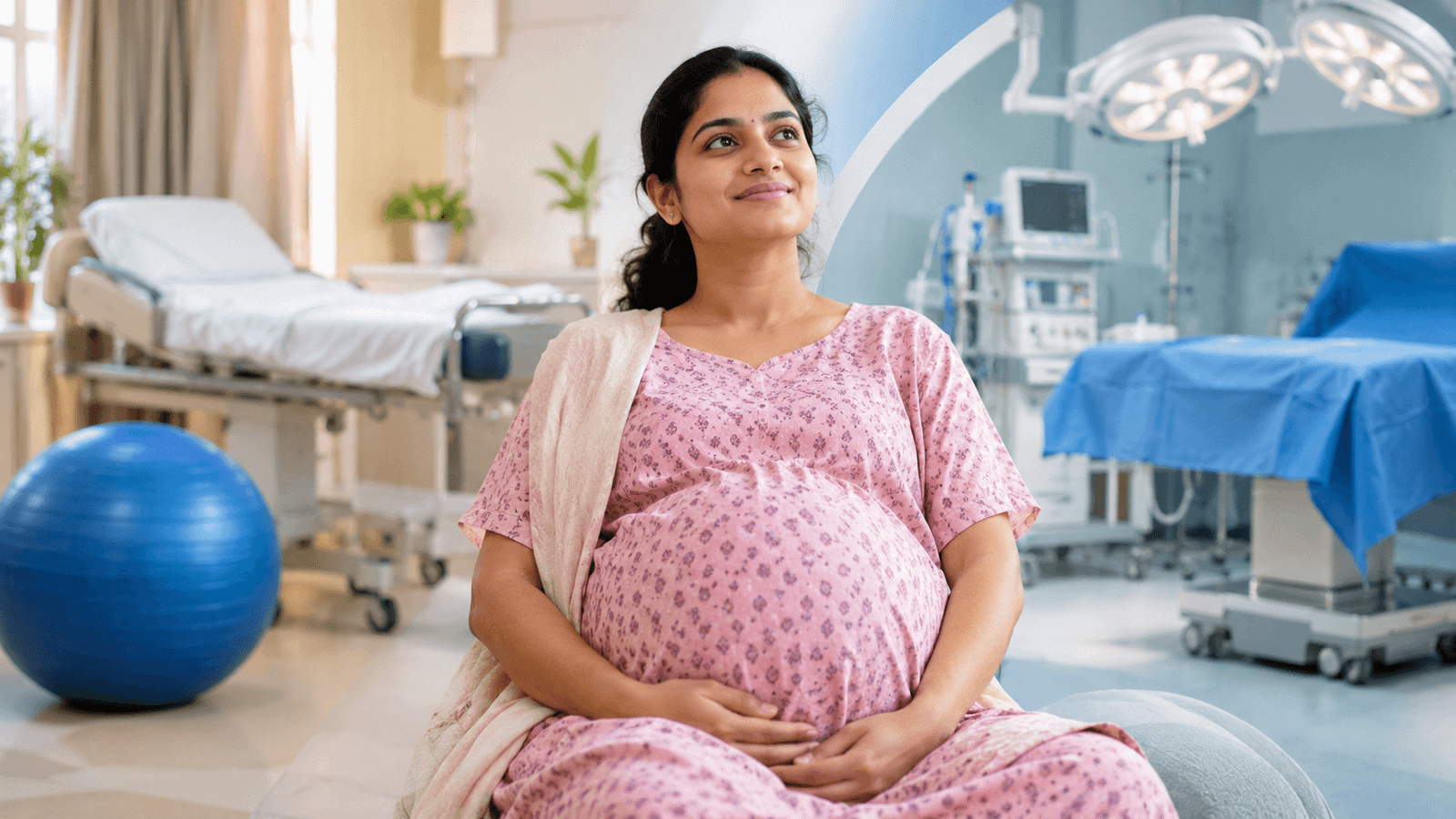
Choosing how your baby will be delivered is one of the biggest decisions many expectant mothers think about during pregnancy. You may hear people discuss normal delivery and C-section as though one is always better than the other. In reality, there is no single delivery method that is right for every woman.
A vaginal birth, commonly called a normal delivery, may be appropriate when pregnancy is progressing normally and there are no medical reasons to avoid labour. A Cesarean section, or C-section, may be recommended when vaginal birth could pose a significant risk to the mother or baby.
The decision should be based on your pregnancy, baby’s position, medical history, previous deliveries, pregnancy complications, preferences and the advice of your obstetrician. The goal is not simply to choose between two methods, but to achieve the safest possible birth for both mother and baby.
What Is a Normal or Vaginal Delivery?
A vaginal delivery occurs when the baby is born through the vagina after labour. Labour may begin naturally or may be medically induced when there is a reason to start delivery.
Vaginal birth does not always mean that labour will happen without medical assistance. Some women may need induction, pain relief, continuous monitoring or an assisted vaginal delivery using instruments such as forceps or a vacuum device.
When pregnancy is uncomplicated, vaginal birth is often an appropriate option. Your obstetrician will assess your pregnancy and discuss whether there are any reasons that might make another delivery method safer.
What Is a C-Section?
A C-section is a surgical procedure in which the baby is delivered through an incision made in the mother’s abdomen and uterus.
A C-section can be planned in advance or performed as an emergency when circumstances during pregnancy or labour make vaginal delivery unsafe or less appropriate.
Because a C-section is major abdominal surgery, it carries surgical risks and generally requires a longer recovery than an uncomplicated vaginal delivery. However, when medically indicated, it can be an important and potentially lifesaving procedure for the mother or baby.
Normal Delivery vs C-Section: Key Differences
| Factor | Vaginal Delivery | C-Section |
|---|---|---|
| Method | Baby is delivered through the vagina | Baby is delivered through surgical incisions |
| Surgery | No abdominal surgery | Major abdominal surgery |
| Recovery | Usually faster after an uncomplicated birth | Usually takes longer because of surgical recovery |
| Hospital stay | Often shorter when there are no complications | Usually longer than uncomplicated vaginal birth |
| Common concerns | Labour pain, tearing or assisted delivery may occur | Incision pain, infection, bleeding and blood clots are possible |
| Future pregnancies | Usually no uterine scar from delivery | Uterine scar may affect options and risks in future pregnancies |
Individual recovery varies significantly. A difficult vaginal delivery can require more recovery than an uncomplicated birth, while many women recover well after a planned C-section. Your obstetrician can explain the likely risks and benefits in your particular situation.
What Are the Benefits of Vaginal Delivery?
Usually Faster Physical Recovery
When vaginal delivery is uncomplicated, there is no abdominal surgical incision to heal. Many women are able to move around and return to routine activities sooner than after a C-section.
Shorter Recovery From Major Surgery
Because vaginal birth does not involve abdominal surgery, there are no surgical wound-related risks associated with a C-section.
Avoids C-Section Surgical Risks
Every operation carries risks. C-section can be associated with infection, significant bleeding, blood clots and, rarely, injury to nearby organs. Vaginal delivery avoids these particular abdominal surgical risks.
Potential Advantages in Future Pregnancies
A vaginal birth does not leave a uterine surgical scar. A previous C-section, on the other hand, can influence decisions and risks in subsequent pregnancies and deliveries.
What Are the Possible Challenges of Vaginal Delivery?
Vaginal delivery is not completely risk-free. Labour can sometimes be prolonged or may not progress as expected. Some women may experience perineal tears, significant bleeding or require an assisted vaginal delivery.
In some situations, labour may begin with an intended vaginal birth but ultimately require an emergency C-section if the mother or baby develops a problem.
Your healthcare team continuously assesses the progress of labour and the wellbeing of both mother and baby to determine whether continuing vaginal delivery remains appropriate.
What Are the Benefits of a C-Section?
Can Be the Safest Option in Certain Medical Situations
The biggest advantage of a C-section is that it can reduce risks when vaginal delivery would be unsafe or unlikely to be successful.
For example, a C-section may be recommended when the baby is in a position that makes vaginal birth unsafe, when there are concerns about the baby’s wellbeing, when the placenta is blocking the birth canal, or when labour is not progressing adequately.
Planned Delivery in Certain High-Risk Pregnancies
Some pregnancy complications allow doctors to plan delivery in advance. This can help the medical team prepare appropriately for the mother and baby’s specific needs.
May Avoid Certain Complications of Difficult Vaginal Birth
When vaginal birth carries a significant risk because of the baby’s position, placental problems or other medical circumstances, a planned C-section may offer a safer alternative.
What Are the Risks of a C-Section?
A C-section is generally a safe procedure when performed in an appropriate medical setting, but it is still major surgery.
Potential complications include:
- Wound infection
- Infection of the uterus
- Heavy bleeding
- Blood clots
- Reactions or complications related to anesthesia
- Rare injury to nearby organs such as the bladder
- Temporary breathing difficulties in the baby, particularly when delivered before 39 weeks without a medical reason
The risk depends on factors such as whether the C-section is planned or performed urgently, the mother’s health and the reason for the procedure.
How Long Does Recovery Take?
Recovery is different for every woman. After an uncomplicated vaginal delivery, many women can gradually return to normal activities relatively quickly.
Recovery following a C-section generally takes longer because the mother is recovering from abdominal surgery as well as childbirth. Pain and discomfort around the incision are common during the early recovery period, and strenuous activities may need to be avoided for several weeks.
Your obstetrician will advise you about walking, driving, exercise, lifting, sexual activity and other aspects of postpartum recovery.
When Is a C-Section Recommended?
A C-section may be recommended when vaginal delivery would be significantly risky or is unlikely to be safe. Some situations include:
- Placenta previa or certain other placental problems
- Baby remaining in a breech or transverse position when vaginal birth is not considered appropriate
- Signs that the baby may not be receiving enough oxygen during labour
- Labour that is not progressing despite appropriate management
- Significant vaginal bleeding
- Certain maternal medical conditions
- Some previous uterine surgeries
- Certain complications involving the baby
The exact recommendation depends on the individual circumstances. A C-section is not automatically required simply because one of these factors is present, and the obstetrician will assess the overall situation.
Can You Choose a C-Section Without a Medical Reason?
Some women may prefer a planned C-section because of anxiety about labour, previous difficult birth experiences or personal preferences. This is an important conversation to have with your obstetrician.
Your doctor should explain the potential benefits and risks of both approaches, discuss your concerns and help you make an informed decision. If fear or anxiety about childbirth is a major concern, discussing those feelings during pregnancy can help identify appropriate support.
What Factors Determine the Best Delivery Method?
1. Baby’s Position
The baby’s position can strongly influence delivery planning. A baby positioned head-down is generally more suitable for vaginal birth, while breech or transverse presentation may require additional assessment and, in some situations, C-section.
2. Placental Position
The location of the placenta is evaluated during pregnancy. If the placenta is covering the cervix, vaginal delivery may not be safe.
3. Baby’s Wellbeing
During pregnancy and labour, doctors monitor the baby’s wellbeing. If there are concerning changes suggesting that the baby is not tolerating labour safely, an urgent delivery may be necessary.
4. Progress of Labour
Labour does not always progress at the same pace for every woman. If labour becomes prolonged or stops progressing despite appropriate management, the obstetrician may recommend a C-section depending on the circumstances.
5. Mother’s Health
Conditions such as certain forms of high blood pressure, heart disease or other pregnancy complications may affect delivery planning.
6. Previous C-Section
A previous C-section does not automatically mean that another C-section is required. Some women may be candidates for VBAC, or vaginal birth after cesarean, depending on factors such as the type of previous uterine incision, the reason for the previous C-section and the current pregnancy.
7. Number of Future Pregnancies
If you are planning to have more children, your doctor may discuss how the first delivery method could affect future pregnancies. Repeat C-sections can increase certain risks in later pregnancies, including some placental complications.
Does a C-Section Mean You Cannot Have a Normal Delivery Next Time?
No. Many women who have previously had a C-section can potentially have a vaginal birth in a subsequent pregnancy.
This is known as VBAC. Whether VBAC is appropriate depends on individual factors, including the previous uterine incision, medical history and the circumstances of the current pregnancy.
Your obstetrician should discuss the potential benefits and risks of VBAC versus repeat C-section based on your individual situation.
Does Normal Delivery Always Mean Less Pain?
Not necessarily. Labour can be painful, but several pain-relief options are available, including non-medication techniques, medications and epidural anesthesia when appropriate.
A C-section is performed under anesthesia, so pain is generally not felt during the operation itself. However, postoperative pain and discomfort from the surgical incision can occur during recovery.
Therefore, comparing the two methods purely on pain is not enough. The timing and type of pain are different, and individual experiences vary.
Is C-Section Safer Than Normal Delivery?
Neither method is universally safer for every pregnancy.
For an uncomplicated pregnancy where vaginal birth is appropriate, vaginal delivery avoids the risks associated with major abdominal surgery. On the other hand, when vaginal delivery poses a significant risk to the mother or baby, a C-section may be the safer option.
The World Health Organization emphasizes that C-sections can be highly beneficial when medically necessary, while unnecessary C-sections expose mothers and babies to surgical risks without providing a corresponding medical benefit.
Questions to Ask Your Obstetrician
Before deciding on your birth plan, consider asking your doctor:
- Is vaginal delivery appropriate for my pregnancy?
- Is my baby’s position suitable for vaginal birth?
- Are there any concerns about my placenta?
- Do I have any medical conditions that affect my delivery options?
- What circumstances could make a C-section necessary?
- If I have had a previous C-section, am I a candidate for VBAC?
- What pain-relief options are available during labour?
- What would recovery look like after vaginal delivery versus C-section?
- How could this delivery method affect future pregnancies?
How to Prepare for Your Delivery
Regardless of which delivery method is ultimately recommended, good antenatal care can help you prepare for childbirth.
- Attend regular prenatal appointments
- Follow recommended screening and ultrasound schedules
- Discuss your medical history and previous pregnancies with your obstetrician
- Maintain a healthy diet and appropriate physical activity as advised
- Learn about labour and pain-management options
- Discuss your birth preferences with your healthcare team
- Understand that the birth plan may need to change if circumstances change
A birth plan is useful for communicating your preferences, but it should also allow flexibility because pregnancy and labour can change unexpectedly.
Frequently Asked Questions
Is normal delivery better than C-section?
There is no universally better method. When vaginal birth is medically appropriate, it avoids major abdominal surgery. When vaginal delivery would be unsafe, a C-section may be the safer choice for the mother or baby.
Is C-section safer for the baby?
A C-section can be the safest way to deliver a baby in certain situations, such as some breech presentations or when there are concerns about the baby’s wellbeing. However, it is not automatically safer for every pregnancy.
Is normal delivery possible after a C-section?
Yes. Many women may be candidates for vaginal birth after cesarean, or VBAC. Eligibility depends on the previous C-section and the current pregnancy.
How long does it take to recover from a C-section?
Recovery varies, but it generally takes longer than recovery after an uncomplicated vaginal birth because a C-section involves abdominal surgery. Your doctor will advise you on activity and recovery based on your individual condition.
Does a C-section affect future pregnancies?
A previous C-section can influence delivery planning in future pregnancies and is associated with some increased risks, particularly as the number of C-sections increases. Your obstetrician can discuss these risks with you.
Can I request a C-section?
Women may have personal reasons for considering a planned C-section. Your obstetrician should discuss the benefits, risks and alternatives with you and take your individual circumstances and concerns into account.
Can I have a normal delivery with a breech baby?
It depends on the type of breech presentation, pregnancy circumstances, clinical expertise available and other factors. Some breech pregnancies may require a C-section, while selected cases may have other options. Your obstetrician should assess your individual situation.
What if I want a normal delivery but need a C-section during labour?
Sometimes a C-section becomes necessary after labour has already started. This may happen if the baby’s wellbeing becomes concerning, labour stops progressing or another complication develops. The priority is always the safety of the mother and baby.
Conclusion
Choosing between vaginal delivery and C-section is not about finding a universally better option. The right delivery method depends on your health, your baby’s position and wellbeing, the progress of pregnancy and labour, previous delivery history and other individual factors.
For many women with uncomplicated pregnancies, vaginal birth is an appropriate option. For others, a planned or emergency C-section may provide the safest route to delivery. A C-section is a major operation, but when medically indicated, it can be extremely important in protecting the health of the mother or baby.
The best approach is to discuss your individual circumstances with your obstetrician, understand the benefits and risks of each option and make an informed decision based on medical advice and your personal preferences.