
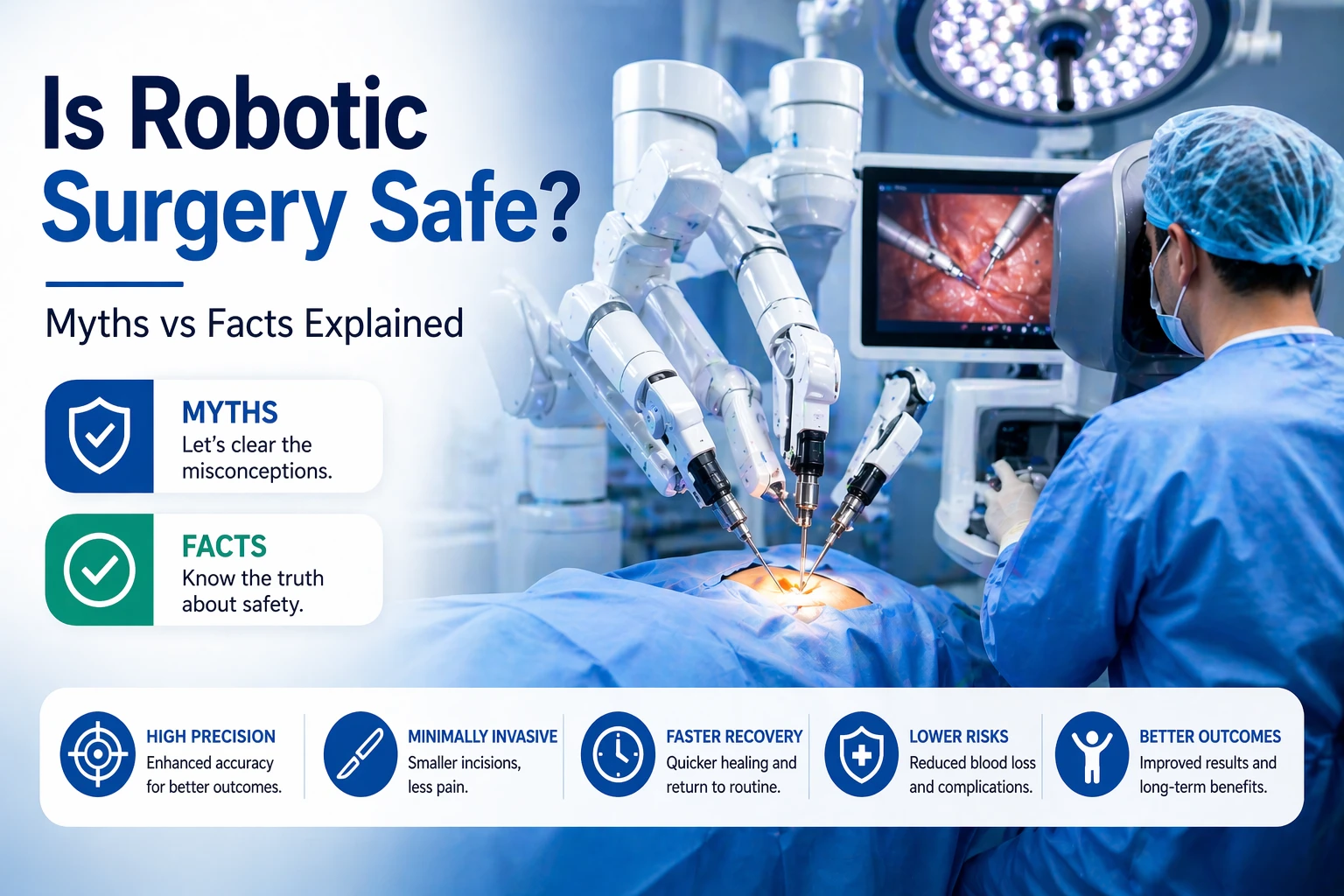
Robotic surgery is one of the most talked-about advancements in modern healthcare. But for many patients, one question still comes up: “Is robotic surgery safe?”
With the word “robot” involved, it’s natural to feel unsure or even anxious. However, robotic-assisted procedures are widely used today across specialties like orthopedics, urology, and general surgery—and they are designed to improve precision and patient outcomes.
In this guide, we break down the most common myths and explain the real facts so you can make informed healthcare decisions.
What is Robotic Surgery?
Robotic surgery, also known as robot-assisted surgery, is a technique where surgeons use a robotic system to perform procedures with enhanced precision.
The system typically includes:
- A robotic arm with surgical instruments
- A console where the surgeon controls movements
- High-definition 3D imaging for better visibility
Important: The robot does not operate on its own. The surgeon is always in full control.
Is Robotic Surgery Safe?
Yes, robotic surgery is considered safe when performed by trained and experienced surgeons. In fact, it often offers greater precision, fewer complications, and faster recovery compared to traditional surgery.
Clinical outcomes have shown that robotic-assisted procedures can:
- Reduce surgical errors
- Minimize blood loss
- Lower risk of infection
- Improve accuracy during procedures
Common Myths vs Facts
| Myth | Fact |
|---|---|
| The robot performs surgery on its own | No, the surgeon fully controls the robotic system at all times |
| Robotic surgery is risky and new | It has been used for years and is widely trusted in modern medicine |
| It replaces the surgeon | It enhances the surgeon’s skills, not replaces them |
| Recovery takes the same time as traditional surgery | Recovery is often faster due to minimally invasive techniques |
| Only complex cases use robotic surgery | It is used for both routine and complex procedures |
Benefits of Robotic Surgery
1. Higher Precision
Robotic systems allow surgeons to perform delicate movements with extreme accuracy.
2. Minimally Invasive
Smaller incisions mean less pain and minimal scarring.
3. Faster Recovery
Patients often recover quicker and return to normal activities sooner.
4. Reduced Complications
Lower risk of infection, blood loss, and surgical errors.
5. Better Outcomes
Improved consistency and surgical accuracy lead to better long-term results.
Potential Risks and Limitations
While robotic surgery is generally safe, it’s important to understand possible risks:
- Infection (common to any surgery)
- Bleeding
- Equipment malfunction (rare)
- Need for conversion to traditional surgery (in some cases)
These risks are usually low and can be minimized with proper medical care and experienced surgeons.
Who Should Consider Robotic Surgery?
Robotic surgery may be recommended for patients who:
- Require joint replacement (knee or hip)
- Need minimally invasive procedures
- Have conditions requiring high precision
- Want faster recovery and reduced hospital stay
Your doctor will evaluate your condition and suggest the best treatment approach.
Robotic Surgery vs Traditional Surgery
| Factor | Robotic Surgery | Traditional Surgery |
|---|---|---|
| Precision | Very high | Depends on manual skill |
| Incision size | Small | Larger |
| Recovery time | Faster | Longer |
| Pain | Less | More |
| Hospital stay | Shorter | Longer |
Why Awareness Matters
Many patients hesitate due to misinformation or fear of technology. Understanding how robotic surgery works helps build confidence and allows you to make informed decisions.
Platforms like Amuka aim to simplify this process by helping patients explore treatment options, understand procedures, and connect with the right care.
Conclusion
So, is robotic surgery safe? The answer is yes—when performed by trained professionals, it is not only safe but often more precise and efficient than traditional methods.
By combining advanced technology with surgical expertise, robotic-assisted procedures are improving outcomes and helping patients recover faster with less discomfort.
If you’re considering surgery, discussing robotic options, Amuka can help you choose the best path for your health.
Frequently Asked Questions (FAQs)
Is robotic surgery completely automated?
No, robotic surgery is not automated. The surgeon controls every movement using the robotic system.
Is robotic surgery safer than traditional surgery?
In many cases, robotic surgery offers greater precision, fewer complications, and faster recovery compared to traditional surgery.
Are there risks involved in robotic surgery?
Like any surgery, there are risks such as infection or bleeding, but they are generally low and manageable.
Who performs robotic surgery?
A trained and experienced surgeon performs robotic surgery using a robotic system as a tool.
Does robotic surgery reduce recovery time?
Yes, most patients experience faster recovery due to smaller incisions and less tissue damage.