

Hip pain isn’t just uncomfortable—it can slowly take away your independence. Simple activities like walking, climbing stairs, or even sitting for long periods can become difficult. For people dealing with severe joint damage, robotic hip replacement in LB Nagar, Hyderabad is emerging as a highly effective and advanced solution.
With improved surgical precision and faster recovery, robotic-assisted procedures are transforming how hip replacement is performed. This guide covers everything you need to know—from how it works to benefits, risks, cost, and recovery.
What is Robotic Hip Replacement?
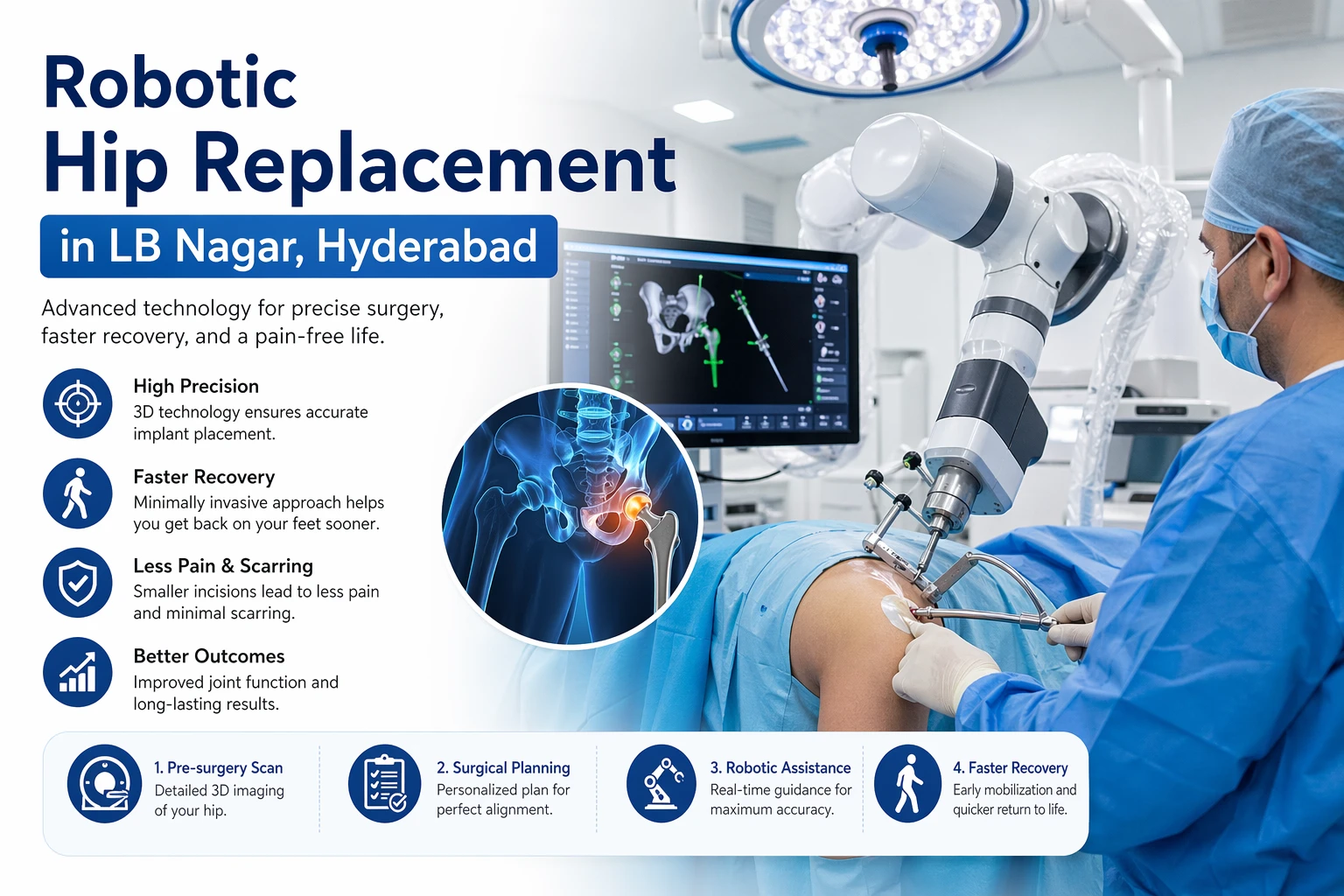
Robotic hip replacement is an advanced surgical technique where a robotic system assists the surgeon in replacing a damaged hip joint with an artificial implant.
This technology enhances accuracy by using:
- High-resolution 3D imaging
- Data-driven surgical planning
- Real-time guidance during surgery
The robot does not perform the surgery independently. Instead, it acts as a precision tool controlled by the surgeon to ensure better outcomes.
Understanding the Hip Joint and Why Replacement is Needed
The hip is a ball-and-socket joint that allows smooth movement. Over time, this joint can wear down due to:
- Osteoarthritis (most common cause)
- Rheumatoid arthritis
- Injury or fractures
- Age-related degeneration
When the cartilage wears away, bones begin to rub against each other, causing pain, stiffness, and reduced mobility. In such cases, hip replacement becomes necessary.
How Robotic Hip Replacement Works
Step-by-Step Process
- Pre-surgical planning: A CT scan creates a detailed 3D model of your hip joint.
- Customized surgical mapping: The surgeon plans implant size, angle, and alignment.
- Robotic-assisted surgery: The robotic arm provides real-time feedback and precision.
- Post-surgery recovery: Patients begin early movement and rehabilitation.
| Feature | Robotic Surgery | Traditional Surgery |
|---|---|---|
| Precision | Very high (3D-guided) | Manual |
| Incision size | Smaller | Larger |
| Blood loss | Minimal | Higher |
| Recovery time | Faster | Slower |
| Implant alignment | Highly accurate | Less consistent |
Key Advantages
- Reduced post-operative pain
- Lower risk of complications
- Improved joint function
- Better implant longevity
- Faster return to normal activities
Who is the Right Candidate?
You may be suitable for robotic hip replacement if you experience:
- Persistent hip pain despite treatment
- Difficulty walking or standing
- Joint stiffness limiting movement
- Severe arthritis or cartilage damage
- Reduced quality of life due to hip issues
A detailed medical evaluation is required to confirm eligibility.
Types of Hip Replacement Procedures
| Type | Description | Best For |
|---|---|---|
| Total Hip Replacement | Both ball and socket are replaced | Severe joint damage |
| Partial Hip Replacement | Only the ball portion is replaced | Certain fractures |
| Hip Resurfacing | Bone is preserved and capped with metal | Younger, active patients |
Robotic technology can be used in most of these procedures to improve accuracy.
Cost of Robotic Hip Replacement in Hyderabad
| Expense Component | Estimated Cost (INR) |
|---|---|
| Pre-operative tests | ₹10,000 – ₹25,000 |
| Surgery & implant | ₹2,50,000 – ₹5,50,000 |
| Hospital stay | ₹50,000 – ₹1,50,000 |
| Rehabilitation | ₹20,000 – ₹50,000 |
Total Estimated Cost
₹3,00,000 to ₹7,00,000
Costs vary depending on implant type, complexity, and hospital infrastructure.
Recovery Timeline
| Stage | Timeline |
|---|---|
| Walking with support | 1–2 days |
| Light daily activities | 2–6 weeks |
| Full recovery | 3–6 months |
Tips for Faster Recovery
- Follow physiotherapy exercises regularly
- Maintain a healthy diet
- Avoid high-impact activities initially
- Attend all follow-up appointments
Risks and Considerations
While robotic hip replacement is generally safe, like any surgery, it carries some risks:
- Infection
- Blood clots
- Implant wear or loosening over time
- Nerve or tissue damage (rare)
Choosing an experienced surgical team and following post-operative care guidelines significantly reduces these risks.
Robotic vs Traditional Hip Replacement: What Should You Choose?
Robotic surgery is often preferred for its precision and faster recovery. However, the best choice depends on:
- Your medical condition
- Surgeon’s recommendation
- Budget and accessibility
Discussing all options with your doctor is essential before making a decision.
Why Robotic Hip Replacement is Gaining Popularity
- Technological advancements in healthcare
- Increased patient awareness
- Better long-term outcomes
- Higher success rates compared to conventional methods
For patients in LB Nagar, this means access to modern, effective treatment options close to home.
Conclusion
Robotic hip replacement in LB Nagar, Hyderabad represents a major step forward in orthopedic care. With improved accuracy, reduced pain, and faster recovery, it offers a reliable solution for those struggling with chronic hip problems.
If hip pain is limiting your lifestyle, seeking timely medical advice can help you explore the right treatment and regain mobility.
Frequently Asked Questions (FAQs)
What is robotic hip replacement?
Robotic hip replacement is a procedure where a robotic system assists the surgeon in performing precise joint replacement surgery.
Is robotic hip replacement better than traditional surgery?
It offers higher precision, smaller incisions, and faster recovery, making it a preferred option for many patients.
How long does the surgery take?
The procedure typically takes 1.5 to 2 hours.
When can I walk after surgery?
Most patients can walk with support within 24–48 hours after surgery.
How long does the implant last?
Hip implants usually last 15–25 years depending on usage and care.
Is physiotherapy necessary after surgery?
Yes, physiotherapy is essential for regaining strength, flexibility, and mobility.